ABAX Vision AI: Integrated dash cams for a safer fleet
ABAX Vision AI: Integrated dash cams for a safer fleet
5 best equipment tracking software of 2026: in-depth comparison
Misplaced plant machinery leads to stalled projects, wasted labour hours, and unnecessary rental costs. Reliable equipment tracking software eliminates these costly blind spots with real-time visibility. Explore our comparison of the best plant tracking solutions of 2026.


Contents
Key takeaways:Finding the best equipment tracking software for your businessTop 5 equipment tracking software comparedWhy should companies invest in equipment tracking software?How to pick the right equipment software for your needsTrack your worksite equipment with ABAXKey takeaways:
Discover the top 5 tracking tools on the market for managing worksite assets and keeping projects strictly on time.
Learn how the best equipment tracking software can completely eliminate the hours wasted searching for misplaced tools, drastically reduce equipment loss, and improve accountability across mixed site environments.
Find expert, actionable advice on evaluating software based on your specific worksite needs, integration requirements, and available budget.
Finding the best equipment tracking software for your business
Whether you are managing a logistics yard, a large industrial plant, or a busy construction site, knowing exactly where every item is at any given time is vital. Implementing a reliable system for plant tracking eliminates the guesswork entirely. In this guide, we review the very best equipment tracking solutions available in 2026, comparing their features, ideal use cases, and pros and cons to help you make the right choice for your business.
It is important to note that this guide focuses primarily on worksite equipment - such as heavy machinery, tools, and plant assets - while also touching upon systems that scale to include wider fleet safety and camera functionality.
Top 5 equipment tracking software compared
Finding the best equipment tracking system depends on what matters most to your daily operations - whether that is asset visibility across a site, vehicle cameras for road safety, strict site access compliance, or heavy machinery security. Below is a high-level overview of the top 5 solutions on the market.
Let us take a deeper look at each software, evaluating their key features, integration capabilities, and pricing structures to help you narrow down the perfect fit.
1. ABAX: best overall for worksite equipment
ABAX Worksite takes the top spot as the most comprehensive and flexible asset-led solution for site operations. ABAX offer a balanced approach focused heavily on asset availability, utilisation, and indoor/outdoor site visibility, providing an broad foundation for growing businesses.
Furthermore, it easily scales to accommodate sophisticated fleet safety tools, including advanced AI dashcams, meaning it can grow as your operational requirements expand. It is designed to effortlessly provide plant tracking and visibility for a wide variety of assets across industrial plants, utilities, logistics yards, warehouses, and construction sites.
Pros and cons
Pros: Highly intuitive interface, excellent for plant tracking from small hand tools to heavy machinery, outstanding battery life on tracking units, and OEM API capabilities with no extra hardware needed.
Cons: Historically focused primarily on tools and operational assets rather than long-haul heavy transport compliance.
Top features
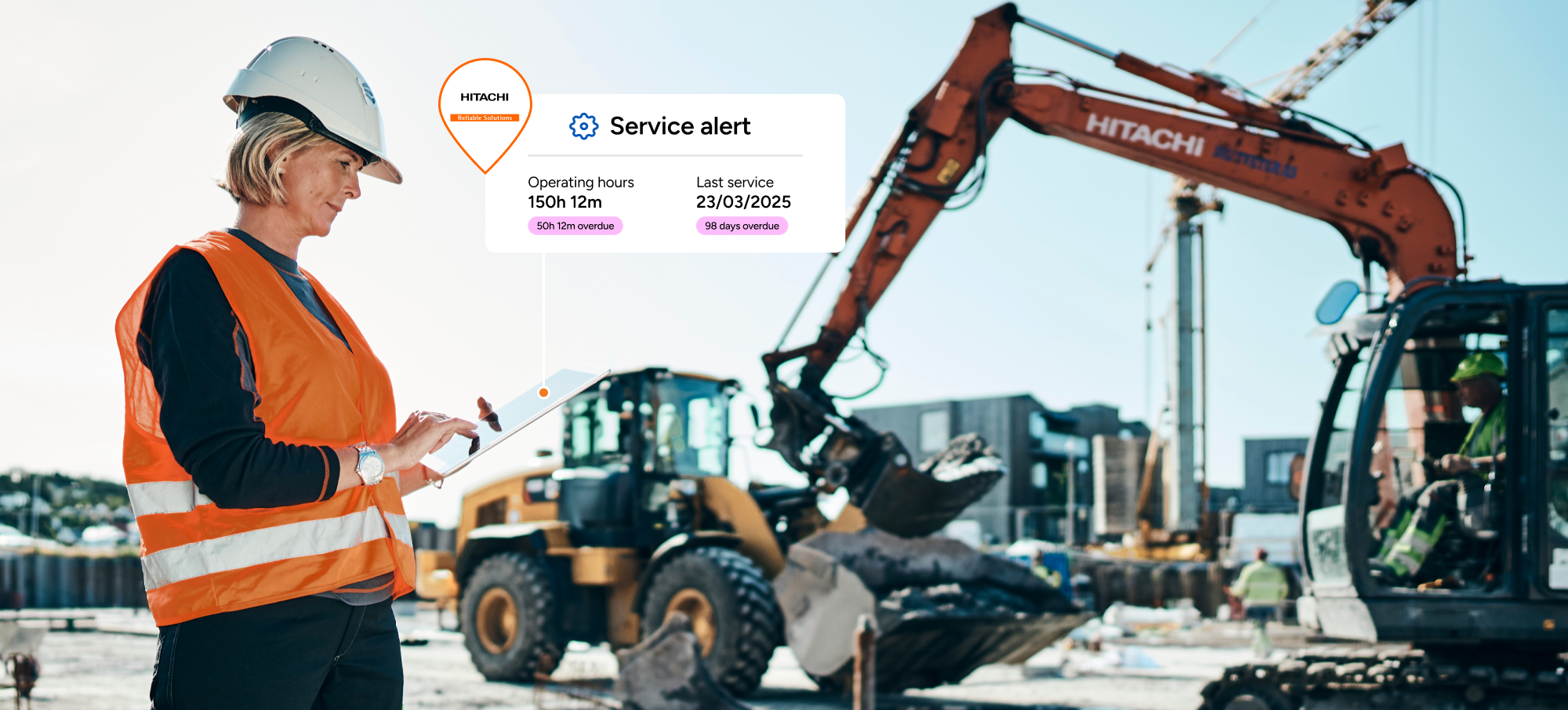
ABAX Smart Connect: Instant API integrations with major brands like JCB, Hitachi, John Deere, Volvo, and CAT - allowing you to track heavy machinery with no additional hardware required.
Real-time location tracking for tools, machinery, and non-powered assets.
Geofencing capabilities to instantly alert managers if equipment leaves a designated worksite.
Utilisation reporting to help balance equipment usage and optimise maintenance schedules.
Integrations
Alongside the powerful ABAX Smart Connect OEM integrations, it integrates with popular ERP and project management tools, offering open APIs for custom reporting workflows.
Pricing
Pricing is tiered based on the number of tracked assets and specific hardware requirements.
Request a quote using our online Price Wizard

2. Trackunit: best for construction machinery
Trackunit is a strong competitor in the telematics space, focusing heavily on construction environments. It is tailored to the needs of contractors dealing with heavy plant machinery and power tools, making it a strong choice for those specifically embedded in the building sector.
Pros and cons
Pros: Construction industry focus, OEM partnerships, and machine health monitoring directly from the engine.
Cons: Can be overly complex and expensive for non-construction sites like warehouses or general facilities.
Integrations
Integrates with construction-specific ERP software and large-scale rental management systems.
Pricing
Custom pricing based on fleet size, machine types, and hardware needs.


3. Samsara: best for fleet and camera-led tracking
Samsara is a well-known player in the telematics space, and its core strength lies firmly in vehicle-centric tracking, driver safety, and video telematics. While it can track worksite assets, its DNA is undeniably fleet-led.
Pros and cons
Pros: Dashcams, driver safety scoring, and fleet routing tools.
Cons: Expensive, highly reliant on surveillance, and complex for simple worksite asset tracking where you just need to monitor important machines to track.
Integrations
App marketplace with routing, HR, and fleet maintenance integrations.
Pricing
Premium, enterprise pricing model requiring annual or multi-year contracts.


4. Infobric: best for compliance and workforce
Infobric approaches worksites from a workforce and compliance perspective rather than an asset-first mindset. It is good for regulated construction environments requiring site compliance, where controlling exactly who is on site is just as critical as knowing where the assets are.
Pros and cons
Pros: Access control, workforce management and safety compliance features.
Cons: Workforce-led rather than asset-led, meaning it has limited dedicated asset tracking depth compared to pure equipment platforms.
Integrations
Integrations with HR systems and site compliance databases.
Pricing
Custom pricing based on site size and hardware installations.

5. So-Trak: best for plant machinery security
So-Trak occupies a specific niche, focusing primarily on plant machinery security and heavy asset theft prevention. It is less about asset visibility and more about ensuring high-value assets are locked down.
Pros and cons
Pros: Security features like remote immobilisation and auto-scheduling.
Cons: Hardware-only focus, strictly UK-focused operations, a 120-second slow map refresh rate, and it lacks dedicated tool tracking for smaller site assets.
Integrations
Primarily functions as a standalone security and hardware solution.
Pricing
Custom quote based on machinery installation requirements and security needs.
Why should companies invest in equipment tracking software?
Managing a worksite without an equipment tracking system makes it difficult to keep projects on schedule and budgets under control. Relying on manual checks and guesswork often leads to hidden costs that drain your profits. Implementing a reliable tracking solution solves these everyday problems by giving you a clear view of your entire inventory. Here is why investing in this software makes a real, immediate difference to your daily operations.
First, proper plant tracking saves your team hours of wasted time. Instead of walking around a large site looking for a missing generator, Site Managers can check a digital map and find it instantly. Research showcased on Construction Dive shows that approximately 97% of contractors lack real-time asset visibility.
Second, it protects your business from the heavy cost of theft. Looking at stolen equipment recovery rates shows why prevention is so critical. Tracking software uses geofencing to greatly reduce the risk of plant equipment theft. If a machine is moved off the site during the night, the system sends an instant alert to your phone so you can act quickly. The National Crime Intelligence Service and local police consistently state that active plant tracking devices are the best way to stop organised theft.
Finally, the benefits of telematics in construction and operational businesses go far beyond security. It gives you a clear picture of how your assets are being used. Many companies waste money renting extra equipment because they assume all their own machines are busy. Tracking software shows you exactly which machines are sitting idle. This allows you to move your own assets to where they are needed and cut out unnecessary rental costs completely.
How to pick the right equipment software for your needs
Evaluating the best equipment tracking solutions requires a clear, honest understanding of your day-to-day operational pain points. Do not just buy the software with the most features; buy the software that actually solves your specific worksite problems. Start your evaluation by asking yourself:
What am I tracking? Do you need to track large excavators, small hand tools in a warehouse, or a complex mix of both across multiple sites?
What is my primary goal? Are you trying to stop theft, improve maintenance scheduling, or monitor driver behaviour and fleet safety on the roads?
Who will use the software? Does the platform need to be simple enough for busy site workers to check on their phones, or is it purely designed for back-office data analysts?
If your main issue is losing valuable time looking for equipment across various yards and industrial plants, you desperately need an asset-first solution. Consider the operational trade-offs carefully: while advanced AI driver safety cameras are an excellent, highly beneficial addition to a connected fleet, paying a premium for heavy road-compliance platforms can be unnecessary if your immediate priority is simply to locate a missing piece of plant equipment.
Look for a scalable provider that lets you start with dedicated plant tracking and easily add dashcams and fleet safety modules later when you actually need them.
Furthermore, you should always look for solutions that offer adaptive intelligence and genuine ease of use. A unified platform that uses simple, jargon-free dashboards will always experience significantly higher adoption rates among your site workers than an overly complex system. Remember, the software is only effective if your team actually uses it. Therefore, evaluating tracking construction equipment must involve thoroughly trialling the user interface to ensure it is intuitive for your specific workforce.
Track your worksite equipment with ABAX
Managing worksite operations should not be a constant, daily battle against misplaced tools, unutilised machinery, and the looming threat of theft. The very best equipment tracking software gives you total control and visibility, allowing you to efficiently monitor site assets while giving you the flexibility to easily implement modern fleet safety features like AI dashcams when the time is right for your business.
ABAX provides a powerfully unified platform focused strictly on asset availability, workflow optimisation, and seamless scalability. Whether you are managing a large industrial plant, a critical utility project, or a sprawling logistics yard, we give you the precise data you need to keep operations moving efficiently and profitably.
Use our Price Wizard to request a quote in under 2 minutes
About the author

Anna Edwards
Global Marketing Excellence Manager and UK Regional Marketing Manager
Anna Edwards is a B2B marketing expert at ABAX, specialising in content, campaigns and thought leadership across mobility and asset management.
Frequently asked questions about equipment tracking
Equipment tracking such as ABAX Worksite provides real-time location data on a single, centralised map. This means workers and managers no longer need to physically search large sites, make frustrating phone calls to other teams, or manually check out machinery. By knowing exactly where every asset is and whether it is currently in use, projects face far fewer delays, and expensive labour hours are spent on actual tasks rather than searching for missing items.
ABAX Worksite streamlines machine fleet management through GPS tracking and monitoring of machines. Providing more control, reducing the risk of theft, optimising maintenance, and leading to increased efficiency and cost savings.
Absolutely. Equipment tracking allows users to create a digital perimeter - known as a geofence - around your worksite. If an asset is moved outside of this designated area or operated outside of working hours, managers receive an instant alert. Furthermore, tracking software prevents the costly issue of "ghost inventory" - assets that are simply misplaced and needlessly repurchased because managers falsely assume they are lost forever.
Questions around privacy are very common when introducing connected technology to a site or fleet. However, when using an asset-first solution like ABAX, the primary focus is on the location and utilisation of the machine itself.
Geofencing cannot stop theft entirely, but it adds an important extra layer of site safety. If machinery moves outside a predefined zone, the system sends an alert to the team. This allows a fast response and supports equipment recovery with accurate GPS data.
A cloud platform that uses GPS trackers, Bluetooth tags, and OEM connectivity to connect your vehicles, machinery, and tools, then uses AI to optimise how you run your physical operations.
Because each asset has a different job. Vehicles need live, powered trackers like ABAX Fleet for location, driving behaviour and ETAs. Unpowered assets like trailers benefit from robust, long-battery-life trackers that report their location regularly. Smaller tools, which only need to be found within a site, are perfect for a proximity-based solution like the ABAX Locator, which uses Bluetooth. Using the right tool for the job ensures you get the most effective data without paying for features you don't need.