ABAX Vision AI: Integrated dash cams for a safer fleet
ABAX Vision AI: Integrated dash cams for a safer fleet
How Lancashire Fire and Rescue Service solved the equipment visibility gap
In emergency response, operational readiness depends on having absolute certainty of your equipment's physical location at every second. By introducing automated asset tracking from ABAX, Lancashire Fire and Rescue Service eliminated asset cross-contamination, maintained 100% appliance compliance.


Contents
What is operational cross-contamination in emergency services?The solution: background automation, not more rulesBuilt to survive frontline conditionsKey takeaways for fire and rescue leadershipFor any modern fire and rescue service, knowing the exact location of critical gear is not an administrative preference. It is a frontline necessity.
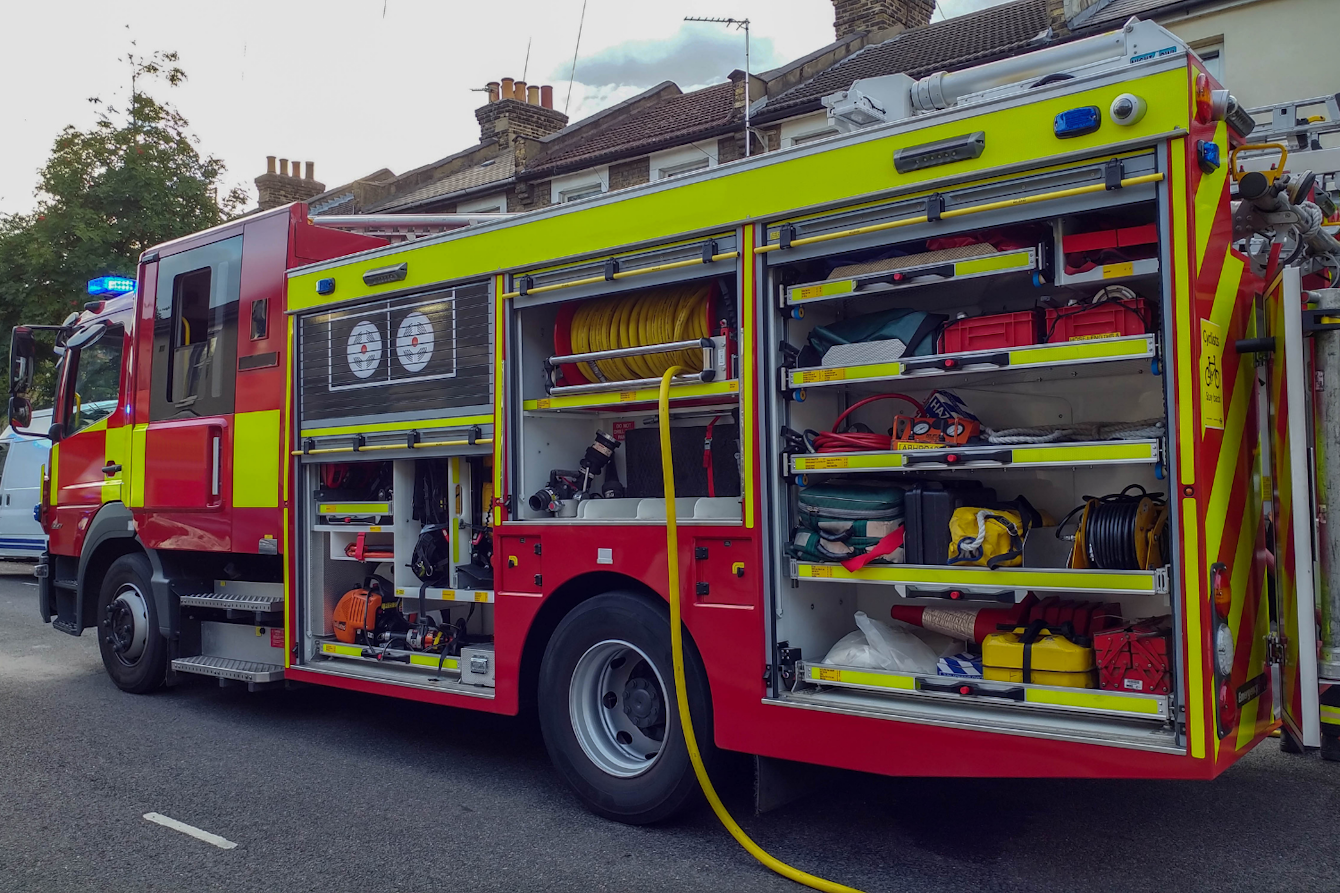
Every time an appliance rolls out of a bay, the crew on board relies on hundreds of matched, certified tools - from hydraulic spreaders and thermal imaging cameras to positive pressure ventilation fans and multi-section ladders. If a single certified asset is missing or out of calibration, the vehicle cannot legally or safely deploy.
Yet across the UK, many emergency response organisations still manage these life-critical assets using manual checklists or static spreadsheets.
When emergency crews respond to regional, multi-agency incidents, those manual systems collapse.
Rather than buying an off-the-shelf IT product that adds administrative drag, Lancashire Fire and Rescue Service (LFRS) partnered directly with ABAX. Over two years, they designed and deployed an automated, silent tracking ecosystem built specifically for frontline rescue realities.
What is operational cross-contamination in emergency services?
Operational cross-contamination is the accidental swapping or misplacement of tools, medical kits, and rescue gear between emergency response vehicles during major, multi-station incidents. Responders share equipment under pressure and pack up rapidly to clear the scene, causing matching serial-numbered components to end up on the wrong vehicles.
Brandon Davies, Breathing Apparatus & Equipment Manager at Lancashire Fire and Rescue Service, explains that equipment displacement is never a discipline issue:
"There is a misconception that equipment ends up in the wrong place because crews are careless. That couldn't be further from the truth. In reality, our responders are highly disciplined professionals working under immense pressure. At a major incident, multiple crews descend on a single scene. Equipment gets shared to save seconds. When the incident closes, crews pack away rapidly to return to run. Naturally, tools end up on the wrong appliances."
Cross contamination can create two immediate compliance problems:
1. The component mismatch
High-risk equipment relies on matched, serial-numbered components. Such as safety ladders which are made of three matching, serial-numbered sections. If sections from different sets get swapped during a hectic incident, they cannot be calibrated or certified.
2. The testing failure
When specialised cutting equipment or gas detectors end up fifty miles away at another station, scheduled maintenance stops working. An appliance goes into the workshop for safety testing, but the gear assigned to it cannot be tested because it is sitting in another county.


The solution: background automation, not more rules
Instead of giving busy crews another checklist to fill out, Lancashire Fire and Rescue Service worked with ABAX to introduce smart vehicle environments.
ABAX Locators were fixed directly to critical tools. Small receiving hubs were fitted to the response appliances and plugged into station bays.
As soon as a tool is returned to an appliance locker, the vehicle registers its presence automatically. If a ladder section or thermal camera is loaded onto the wrong engine at an incident scene, the system notifies the team and updates its physical location in the background.
"For us, it came down to visibility, accountability, and total confidence in our operational readiness. In a fire and rescue environment, we need to know exactly where our critical equipment is - whether it's sitting on a station shelf, loaded onto an appliance, or deployed on the incident ground."
Built to survive frontline conditions
Public sector fleets cannot take frontline fire engines off-run for weeks to complete complex IT installations. The rollout succeeded because of three simple operational decisions:
Zero vehicle downtime: Active watches fitted the self-powered ABAX Locators to their gear during standard shifts. There was no wiring, no vehicle drilling, and no need for outside contractors.
Frontline durability: Emergency equipment gets dropped in mud, soaked with water, and dragged across gravel. The tracking units are IP-rated, impact-tested, and covered by a lifetime hardware warranty with multi-year battery life.
Dedicated public sector support: LFRS worked directly with a dedicated ABAX Account Manager who tailored the system to their needs.
Key takeaways for fire and rescue leadership
Stop asking firefighters to be asset managers: Automating location tracking returns hours of productive time to watch handovers.
Protect equipment certification: Tracking individual components prevents mismatched serial numbers on modular gear like safety ladders.
Deploy without downtime: A modern BLE setup requires no hardwiring and can be rolled out during regular shifts.